Apple's Passport-Style Foldable Faces Off Against Google's Traditional Flip Design
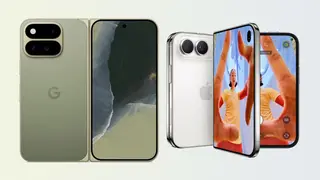
The iPhone Duo and Pixel 11 Pro Fold represent two distinct approaches to foldable smartphones, with Apple favoring a wider, passport-like form factor and Google sticking to a more conventional square fold. The Duo features a 7.6-inch inner display with a nano-texture finish to reduce glare, while the Pixel boasts a brighter 8-inch screen peaking at 3,600 nits. Despite the Pixel being lighter and thinner, both devices feel bulky, and their build materials differ significantly, with Apple using titanium and Ceramic Shield glass.
The iPhone Duo’s passport-style foldability emphasizes portability and content consumption, leveraging a 7.6-inch inner display with a nano-texture finish to reduce glare—a feature absent in the Pixel 11 Pro Fold’s brighter 3,600-nit screen. While both devices are IP68-rated, Apple’s use of titanium and Ceramic Shield glass contrasts with Google’s fiberglass composite back and proprietary ceramic glass, signaling divergent durability priorities. The Pixel 11 Pro Fold’s 8-inch internal screen offers a more traditional foldable experience, but its square aspect ratio can distort video playback.
This rivalry could influence how consumers perceive foldable device usability, with Apple’s design potentially pushing the market toward wider, tablet-like form factors for media, while Google’s approach may appeal to users valuing familiar smartphone proportions. The differing software optimizations—iOS 27’s adaptive interface versus Android’s inconsistent foldable support—may shape developer priorities, possibly accelerating app adaptation for unique screen layouts. Ultimately, these choices may affect long-term adoption, particularly among professionals and creatives who rely on multitasking and visual fidelity.