Kickstarter Launches Futuristic Touchscreen Mouse with Keyboard, Voice, and Motion Controls
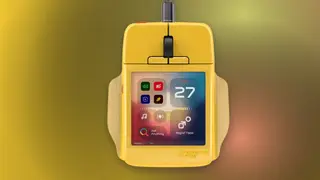
The Arctic Fox Super Mouse features a 3.1-inch touchscreen that doubles as a keyboard, supports swipe typing, voice dictation in 90 languages, and functions as a multi-touch trackpad. It includes motion sensors for gesture control and physical Hyper Keys, all managed via a dedicated Flow app. Despite its ambitious feature set, the mouse lacks wireless connectivity and has an unconventional, bulky design.
Arctic Fox Technologies has launched a Kickstarter campaign for the Super Mouse, a 3.1-inch touchscreen-enabled peripheral priced at $199 for early backers (projected retail: $249), with delivery expected in February 2027. The device features a 720 x 720 resolution display that functions as a dynamic keyboard with swipe typing, voice dictation across 90 languages processed locally, and a multi-touch trackpad. It also includes motion sensors for gesture control, physical Hyper Keys for macros, and is managed via the Flow app for Windows and macOS. The design, described as bulky and reminiscent of the Atari ST mouse, aims to keep the palm away from the screen to prevent accidental touches. Despite its ambitious feature set, the Super Mouse lacks wireless connectivity, relying solely on a USB-C cable. This contrasts with prior attempts like Turtle Beach’s Command Series MC7, which had a smaller 2.25-inch screen, suggesting Arctic Fox is pushing further into the realm of multi-functional input devices.
The company appears to be targeting power users and creative professionals—especially designers—who may benefit from context-aware interface changes across apps like Photoshop or Figma. The integration of voice dictation, gesture control, and physical keys reflects a broader trend in hardware toward consolidating functions into single devices. However, the absence of wireless support undermines its portability and convenience, especially for users accustomed to modern peripherals.
The Super Mouse could influence how users perceive input device ergonomics and functionality, particularly among digital creators who value efficiency and customization. By merging a keyboard, trackpad, voice interface, and gesture control into one tool, Arctic Fox may be testing the limits of peripheral consolidation—a trend seen in devices like the Elgato Stream Deck, which brought customizable buttons to workflow management. However, the lack of wireless connectivity and the bulky form factor may limit adoption beyond early adopters or tech enthusiasts. If successful, this could inspire other manufacturers to explore similar integrations, potentially reshaping expectations for what a mouse can do. Conversely, if it fails to deliver on productivity promises, it may reinforce skepticism toward overly complex hardware solutions. The broader impact may be a reevaluation of user interface design principles—especially around minimizing context-switching and physical strain. What to watch